The True Cost of Cheap Solar: Why a Budget Installation Can Drain Your Wallet

How the financial and regulatory consequences of a budget installation saving £1,500 + upfront can result in thousands of pounds in losses over the 25-year lifespan of a solar PV system.

When comparing solar quotes, a cheap supplier using the exact same hardware brands might look like a bargain. But premium hardware is only half the equation. Cheap suppliers slash prices by skipping structural engineering, rushing critical electrical connections, and taking shortcuts on legal registrations.


A standard home solar system is designed to last 25 years. If you save £1,500 upfront on a budget installation, you are simply delaying the true cost. Review what can happen when corner-cutting installers rush through a project, along with the actual financial consequences.

1. The Legal & Regulatory Hurdles

What Budget Installers Skip: Rushing through or neglecting mandatory compliance paperwork, including proper Microgeneration Certification Scheme (MCS) registration and Distribution Network Operator (DNO) grid approvals.

  • The SEG Financial Trap: Without a valid MCS certificate, you cannot register for the Smart Export Guarantee (SEG). Any surplus energy your roof generates will be sent back to the grid for free.
    • The Long-Term Cost: £4,000 – £8,000 lost in unclaimed export payments over 25 years.
  • The Unapproved Grid Penalty: Failing to secure a DNO connection approval (G98/G99) means your system is illegal. If the grid operator discovers it, they can force you to turn off the system entirely.
    • The Remedial Cost: £600 – £1,500 for retrospective electrical testing, surveys, and legal sign-offs to get turned back on.
  • The Property Sale Block: When you try to sell or re-mortgage your home, solicitors demand your full compliance pack (MCS, DNO, and Building Regulations notices). If your installer didn’t file them, the sale collapses.
    • The Remedial Cost: Thousands of pounds in broken property chains or retrospective indemnity fees.

2. Structural & Structural-Support Weaknesses

What Budget Installers Skip: Forgoing proper wind-load and dead-load structural calculations, handling solar panels roughly, or dropping them down onto thin roof mounts using few roof hooks to complete the job quickly.

  • Smashed Tiles & Silent Leaks: Workers stepping on roof tiles without proper care can leave hidden cracks under the array. Water slowly seeps in, rotting your roof rafters silently over two to three years before appearing on your ceilings.
    • The Remedial Cost: £1,500 – £4,000 for structural timber repairs, scaffolding, and leak fixes.
  • Micro-cracked Panels: Dropping panels roughly during installation creates internal, invisible fractures in the silicon cells. Over winter, these expand, permanently disabling large parts of your array.
    • The Long-Term Cost: 20% to 40% permanent drop in system generation, costing you £3,000 – £6,000 in higher grid energy bills over the system’s lifespan.
  • Wind Uplift Structural Failure: Using cheap, generic mounting rails and skipping structural roof hooks turns your panels into a sail during a storm.
    • The Remedial Cost: £5,000 – £15,000+ if high winds rip the array off the roof, destroying both the equipment and the roof structure underneath.

3. Electrical Reworks & Safety Failures

What Budget Installers Skip: Rushing complicated wiring connections, using thin, low-grade DC cables, and failing to correctly configure current transformer (CT) telemetry clamps.

  • Mismatched MC4 Connectors (Fire Risk): Forcing different brands of DC connectors together under the panels leaves microscopic gaps. These gaps let water enter, creating high electrical resistance and a persistent DC arc fault that can melt the plastic components and ignite roof felt.
    • The Remedial Cost: Complete system shutdown and £1,500 – £3,000 for full scaffold access and retrospective rewiring.
  • Backward CT Clamps & Brain-Dead Batteries: If an installer fits your monitoring clamps backward, your smart system gets confused. It will actively discharge your home battery straight into the grid during peak times and charge it from the grid during high-rate windows.
    • The Long-Term Cost: £500 – £1,000 per year in unnecessarily inflated electricity bills until a competent engineer rewires the system.
  • Unventilated, Overheated Inverters: Mounting the inverter in a hot, uninsulated loft space or small, sealed cupboard saves the installer installation time. However, on hot summer days, the inverter will self-throttle to avoid overheating, shutting down your generation exactly when it should be peaking.
    • The Long-Term Cost: £1,000 – £2,500 in lost solar harvest over time, plus early inverter component burnout.

4. Voided Warranties & Vanishing Contractors

What Budget Installers Skip: Adhering strictly to manufacturer installation manuals and paying for independent insurance policies to back up their business.

  • Voided Component Warranties: Brands like Aiko, Sigenergy, Tesla, Hanchu and Ecoflow have strict installation standards for bolt torque, airflow clearances, and surge protection devices (SPDs). If a cheap installer cuts these corners, the manufacturer will instantly void your 10-to-25-year equipment warranty when an issue arises.
    • The Remedial Cost: £1,200 – £2,500 out of pocket for a replacement hybrid inverter if it fails out of warranty.
  • The ‘Ghost’ Guarantee: Budget solar suppliers often go out of business within a few years because their low profit margins are unsustainable. Without an independently backed Insurance-Backed Guarantee (IBG), your workmanship warranty disappears when they do.
    • The Remedial Cost: You must pay market rates to independent emergency engineers for every minor fault or diagnostic visit over the next 25 years.

The Summary Example: Saving Upfront vs. Protecting Long-Term

The ChoiceUpfront CostRisk of Extra Expenses (25 Years)Total Real-World Cost
Cheap, Non-Compliant
Installer
£9000.00+ £6,000 to £15,000+
(Leaks, lost export income,
component burnouts, re-testing)
£15,000 – £24,000+
FEC Renewables
(Compliant, Certified & Insured)
£10,500.00£0
(Fully optimized, warrantied, and
DNO/MCS compliant)
£10,500.00

Energy tariffs and export payments

Savings are not just about reducing bills. Households can also earn money by exporting excess electricity back to the grid, providing the installer is MCS certified and the application is submitted correctly. The Smart Export Guarantee (SEG) pays for every unit of energy sent back, adding to annual returns.

Property type and location

Roof angle, shading, and orientation all affect how much electricity panels produce. A south-facing roof will usually provide the best output, although east and west-facing roofs can still deliver strong results. With mixed aspects and shading it is important that the variations in performance are compensated for correctly. For more details on the systems we install, visit our Solar PV.

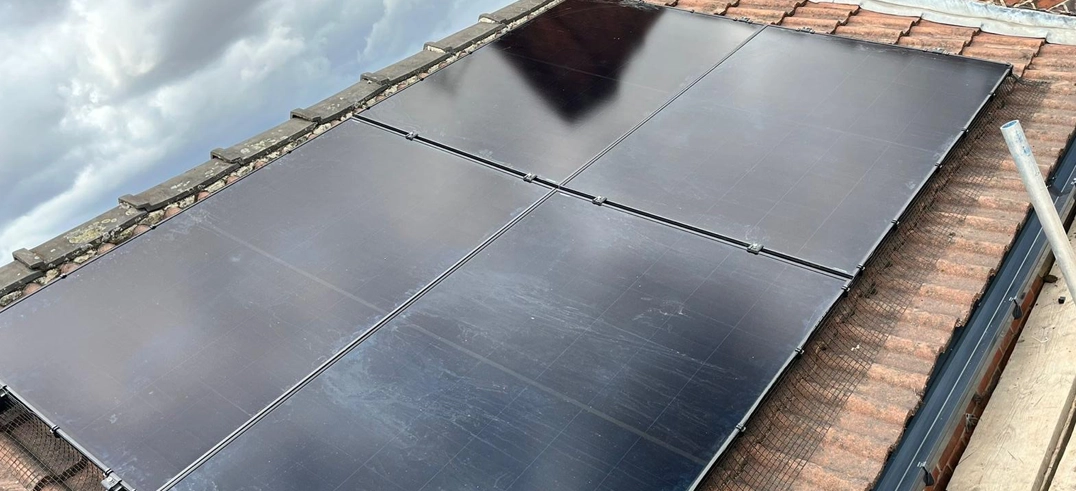
Solar panel fitting on a roof.
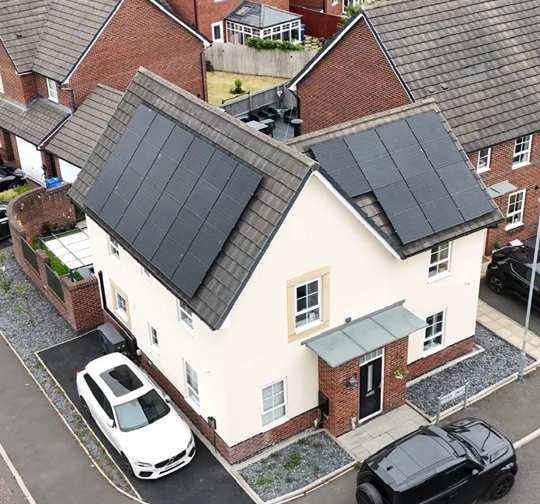
Aerial shot of solar panels on a roof by FEC-Renewables

How Battery Storage Increases Savings

Solar savings can be limited if electricity is only used during the day. Battery storage changes this by storing excess power for later.

Key benefits of battery storage

  • Greater independence: Use stored energy in the evenings instead of buying from the grid.
  • Reduced payback time: More of the electricity you generate is used at home, increasing savings.
  • Resilience against price rises: Less reliance on external suppliers when costs increase.

Example impact

Adding a battery to a typical solar PV system can increase bill savings from around £500 per year to over £800, depending on usage, and providing the inverter and battery have been correctly configured for your specific lifestyle and priorities.

For more information, visit our Battery Storage page.

Solar Panel Payback Period

How long does it take?

The payback period is the time it takes for energy savings to cover the initial installation cost. For most households, this is between 6 and 10 years, after which your energy is effectively free.

What influences payback?

  • Energy prices: The higher they rise, the quicker the system pays for itself.
  • Daytime usage: Homes that use more electricity during the day see faster returns.
  • Battery storage: Adding storage reduces reliance on the grid, shortening payback.

Real-world example

A home in South Yorkshire with a 4 kW system could save around £500 a year. If the system cost £5,000, the payback time would be roughly ten years. With a battery added, savings could rise, reducing the payback to around eight years.

Long-Term Financial Benefits

Lifespan of panels

Solar panels last 25 to 30 years with annual maintenance, and savings continue long after the system has paid for itself. Even after 20 years, premium panels will often generate enough energy to make a meaningful difference to household bills, with as little as 10-20% degradation.

Increase in property value

Homes with certified renewable energy systems are more attractive to buyers as they benefit from day one. Improved Energy Performance Certificate (EPC) ratings can also add value when selling.

Environmental benefit

Although financial savings are the main driver for many households, solar panels also cut carbon emissions, helping families contribute to a more sustainable future.

Maximising Your Solar Investment

Professional installation

Correct fitting is vital to achieve the expected savings. A poorly installed system can severely underperform, reducing long-term returns significantly, often adding up to more than the original investment!

Care and maintenance

Regular checks ensure panels continue to operate efficiently. Our Care Plans are designed to protect your system and provide ongoing support.

Pairing with other renewable technologies

Combining solar panels with heat pumps or air conditioning creates a more efficient energy system, lowering running costs across the home.

Summary

French Electrical Contractors (FEC) are electrical contractors by profession, which means we never cut corners when it comes to your home and your family’s safety. Our Renewables division is supported by an in-house team of technicians who are fully qualified and compliant with the latest edition of the IET wiring regulations.

Furthermore, our MCS certification ensures that your product warranties, Smart Export Guarantee (SEG), and installation are fully backed by comprehensive liability insurance to allow for seamless grid export tariff payments from day one. We don’t aim to be the cheapest for a very good reason – we aim to provide a premium level of service. Ensuring every detail is checked, every component is selected for a purpose, and every installation is safe, fully compliant, and engineered to last, will give you the maximum ROI over its lifetime, far outweighing any difference in upfront cost.

If we do turn out to be the most competitive on price, you can rest assured we have included everything you need to achieve the financial benefits outlined in your proposal.

FEC Renewables provides professional installations across South Yorkshire and surrounding areas. To discuss how much you could save with a solar PV system, contact our team or call 01302 578422.

Make an enquiry